
Interview with Sebastian Borek: Entrepreneurial Spirit, AI and a Vision for Europe
Story
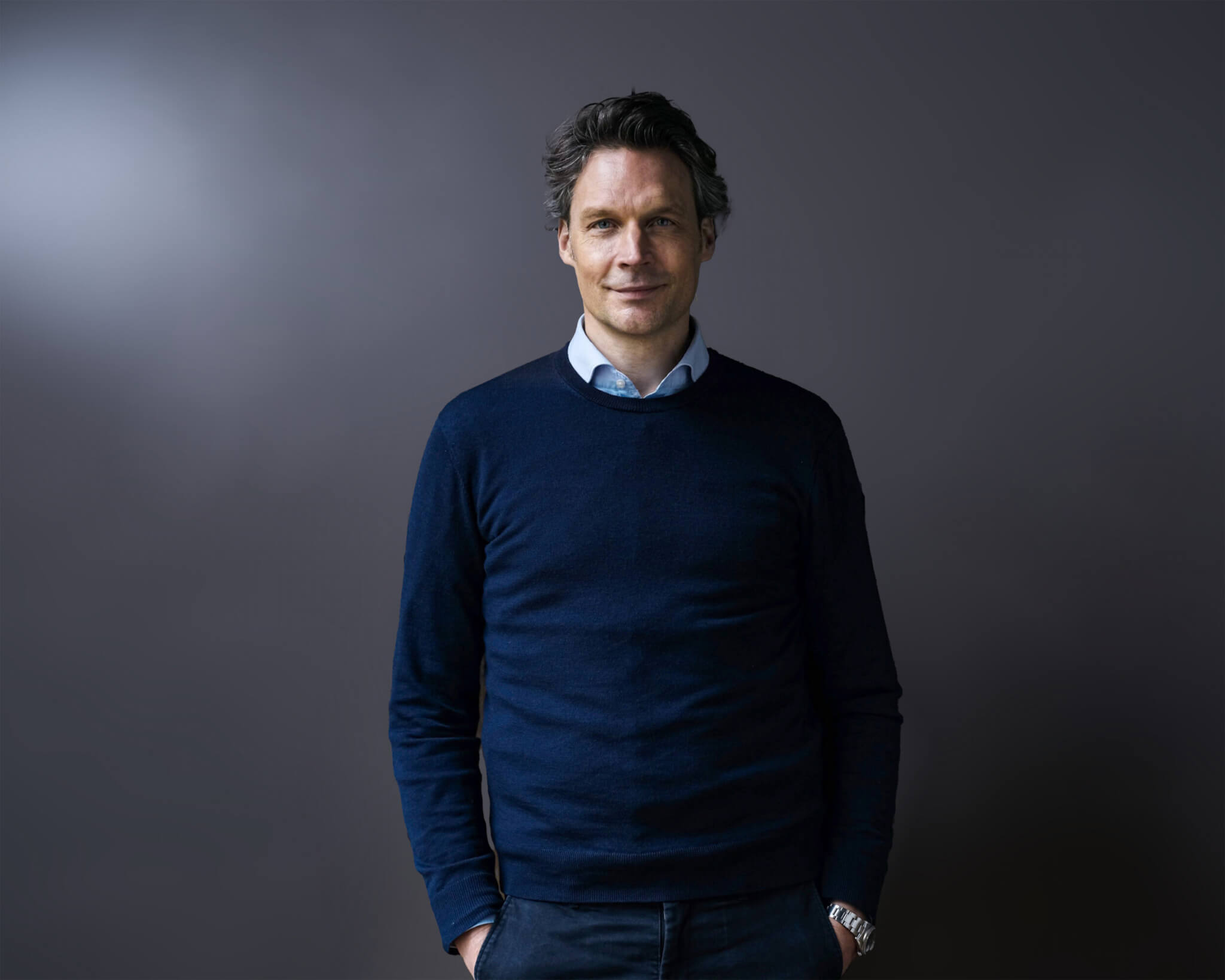
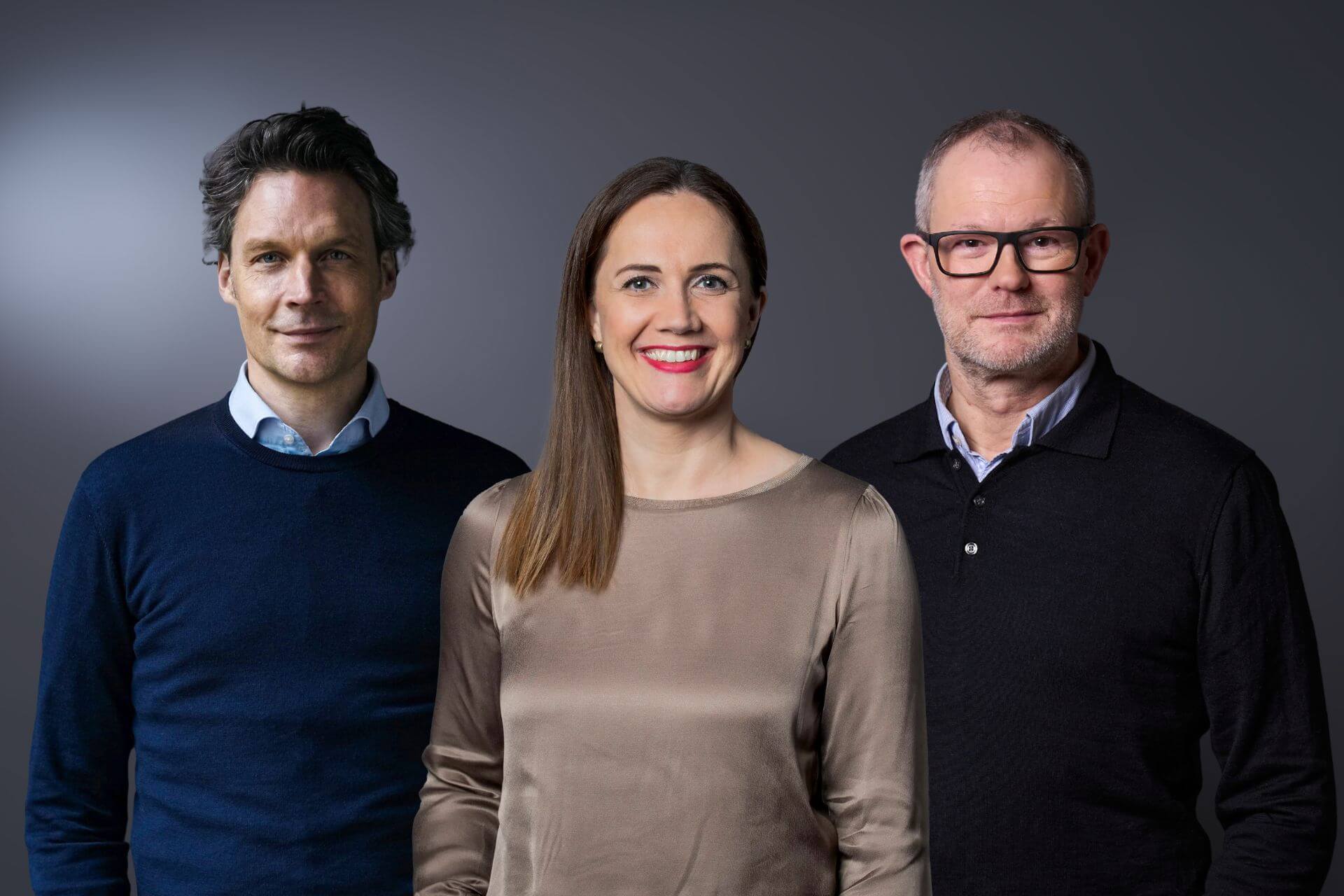
Since mid-October, Sebastian Borek has joined the HTGF management team as Managing Director, responsible for the Digital Tech division. Together with Romy Schnelle and Achim Plum, he forms the fund’s new leadership trio. In our interview, Sebastian shares what drives his passion for strengthening Germany’s future competitiveness, reflects on HTGF’s role in shaping the VC landscape and innovation ecosystem, and discusses how AI is enabling new business models and transforming the venture world.
Sebastian, you joined the HTGF management team on October 13 – even though you weren’t actively looking for a new role. What made you want to come on board?
Sebastian: I’ve always been fascinated by discovering emerging technologies early on and staying right at the forefront of innovation. The world is evolving at a tremendous pace, and I love being part of that change. At the same time, I’m driven by a bigger mission: strengthening the future competitiveness of Germany and Europe in close collaboration with industry and policymakers. HTGF is perfectly positioned for this. Thanks to our public-private setup, we have the resources and expertise to be broadly-positioned. Our team has close links with the research community and is well-connected across Europe, where innovative technologies are emerging. We’re able not only to identify future technologies but also to turn them into real-world applications and create meaningful value. We can serve as a think tank for industry, SMEs and our whole economy.
Together with Romy Schnelle and Achim Plum, you form HTGF’s new leadership trio. What makes this constellation special for you?
Sebastian: The team dynamic was one of the key factors for me. I met Romy and Achim early in the process and immediately felt that it was a great fit. We complement each other perfectly – different backgrounds and experiences, but a shared understanding and a really strong rapport. Each of us is responsible for one of three areas, each with its own ecosystem. Dividing this expertise while aligning around a holistic strategy at the management level makes complete sense to me. We think collectively and act in line with market dynamics across our investment areas.
How has your experience with HTGF been so far?
Sebastian: On a personal level, my experience with HTGF has been really positive: a dedicated team with great commitment, a strong sense of responsibility, and an impressive range of expertise. HTGF is a large and complex organization, and I’ve been pleasantly surprised by how much depth there already is and how well everything is structured.
Right now, I’m having a lot of conversations and often there’s barely enough time. It’s the informal moments, like chats in the coffee kitchen or over lunch, that give me a really good feeling. I’m also looking forward to getting to know our Berlin and Munich offices even better soon. Overall, my impression so far has been very positive.
You’ve built companies and created ecosystems yourself – from Founders Foundation to Hinterland. How are you bringing this entrepreneurial mindset into HTGF?
Sebastian: Over the past few years, I’ve learned a lot about what it takes to build companies and create ecosystems. I want to bring those experiences into HTGF – wherever they can add value. At the same time, there are already many strengths here that I want to build on. My goal is to achieve the best of both worlds.
From my time with Hinterland, I know how to build bridges – between SMEs and industry, between founders, investors, and policymakers. We already have those capabilities at HTGF; now it’s about sharpening our focus and using them even more strategically.
But before applying any external concepts, I want to really understand HTGF. What hidden potential lies within the organization? How can we unlock it together? This is the perfect moment to redefine that – and that’s exactly what I’m working on right now.
How do you see HTGF’s role in the VC market and for the wider economy?
Sebastian: Twenty years ago, HTGF was one of the driving forces behind Germany’s VC scene. We helped shape the early stage of the ecosystem and fulfilled that mission very successfully. Today, it’s about being a role model again. Our public–private structure gives us the opportunity to take new paths – and that’s exactly our mandate. We need to identify where markets don’t function efficiently and where new, relevant needs arise that other VCs aren’t addressing. That’s where we can make a real impact.
The economy is undergoing a profound transformation. Artificial intelligence is changing far more than just processes – it’s having major societal implications. So we have to ask ourselves: how do we position ourselves for the future, and where do we want to set our priorities?
It’s an exciting phase: setting new impulses for the next 20 years, building ecosystems, bringing talented people into entrepreneurship, connecting startups with industry, and strengthening innovation. Our current mission still applies – but it needs to be rethought and applied in a way that fits today’s markets.
That’s exactly what we’re tackling as part of our strategic process: developing clear investment hypotheses that address not only current but also future market needs.
We’re more than 100 people with diverse skills and perspectives. We’re using that diversity to shape a strong strategy. My goal is clear: we must be pioneers – and we can be.
What role does HTGF’s close connection to industry partners and SMEs play?
Sebastian: Our close ties to industry and the Mittelstand are one of our greatest competitive advantages. We give startups access to established companies while helping industry players recognize and leverage innovation at an early stage. Industry is looking for solutions, while startups bring agility and the courage to test new business models. We bridge that gap — acting almost like an extended R&D arm for the economy.
AI is growing at an incredible pace and challenges both founders and VCs. The key question is: Which technology should I bet on? Markets are changing fast, so products, business models and we as investors today need to be far more adaptable and agile.
This is a huge challenge, especially for industrial and family-owned companies. They carry responsibility for their regions and employees and are under significant pressure. That’s where we can help: we’re the partner that identifies the right investments and turns innovation into a competitive advantage. Our role is to build bridges between startups and industry — and with AI and ongoing transformation, that bridge is becoming even more important.
You’ll be leading the Digital Tech investment division. Which developments will shape the coming years, and how are you preparing for them?
Sebastian: AI will transform an entire spectrum of business models in the years ahead. We have to look very closely: who will be disrupted by AI, and who can use it to accelerate growth? The challenge is that we often think linearly, while technological progress is exponential. Especially in the digital tech space, everything moves even faster. That’s what excites me, but it also carries risks. We need to understand where the real substance lies: proprietary data, clear applications, and genuine unfair advantages.
That’s why I’m a big believer in hypothesis-driven investing. We develop guiding theses about which technologies will prevail and what impact they’ll have on different industries, and we continuously validate those hypotheses. It’s the only way to invest intelligently.
At the same time, it takes a deep understanding of both technology and markets. Today, investors need to be able to engage with founders as equals on a content level. Only then can you earn your place on the right cap tables.
You recently said that Germany needs to send a clear signal that it attracts founders. What could that signal look like in practice?
Sebastian: That question has been on my mind for more than ten years. Right now, the U.S. is the strongest magnet for founders, with larger funding rounds, greater risk appetite, and an ecosystem that thinks big. We can’t copy that culture one-to-one, but we can play to our own strengths.
Germany and Europe need a clear vision for the future, a narrative that shows: this is where the jobs and technologies of tomorrow are being created. Instead of just saying we’ve fallen behind, we need to define and occupy new fields like quantum computing, fusion technology or humanoid robotics.
That’s not wishful thinking; it’s a strategic necessity. We need to develop hypotheses about where we want to be global leaders in ten years and build the capabilities to get there. HTGF can play a key role here, not only for Germany, but for Europe as a whole. We have the opportunity to connect ecosystems and translate research into real-world applications.
From Lisbon to Bonn – what would you say Germany could learn from Portugal’s startup scene?
Sebastian: In Lisbon, the European spirit is much more alive. The ecosystem is international, and Portugal has deliberately positioned itself as a startup hub. That attracts talent and investment and shows what can happen when politics and key players share a clear vision. Attract, don’t chase – that’s the mindset. You need to develop a clear sense of what you want to be and then work towards it with consistency.
That’s the kind of mindset I want to bring to HTGF as well. We need strong networks, international connectivity, and a narrative that fits our strengths. Europe has enormous potential — we just have to actively unlock it.
And finally: when you look back in three years, what do you want to be measured by?
Sebastian: Most importantly, I want everyone at HTGF to genuinely enjoy coming to work, not just because of our culture or the great offices, but because they know that what we do truly matters. We’re shaping future viability.
If we can create that sense of purpose not only within HTGF but across our entire ecosystem, I’ll be happy. I want to spark a sense of optimism for the future — a feeling that things are moving, that it’s worth the effort. If not us, who? If not now, when?
Do you want to
learn more?

I am your contact
for all press inquiries:
Tobias Jacob
More Stories

 zum Artikel
HTGF 2025: Tailwind for Europe’s Wirtschaftswunder 2.0 – Romy Schnelle, Dr. Achim Plum and Sebastian Borek in conversation
 zum Artikel
The biggest bottleneck in the AI stack and FMC’s solution – Interview with CEO Thomas Rückes
 zum Artikel