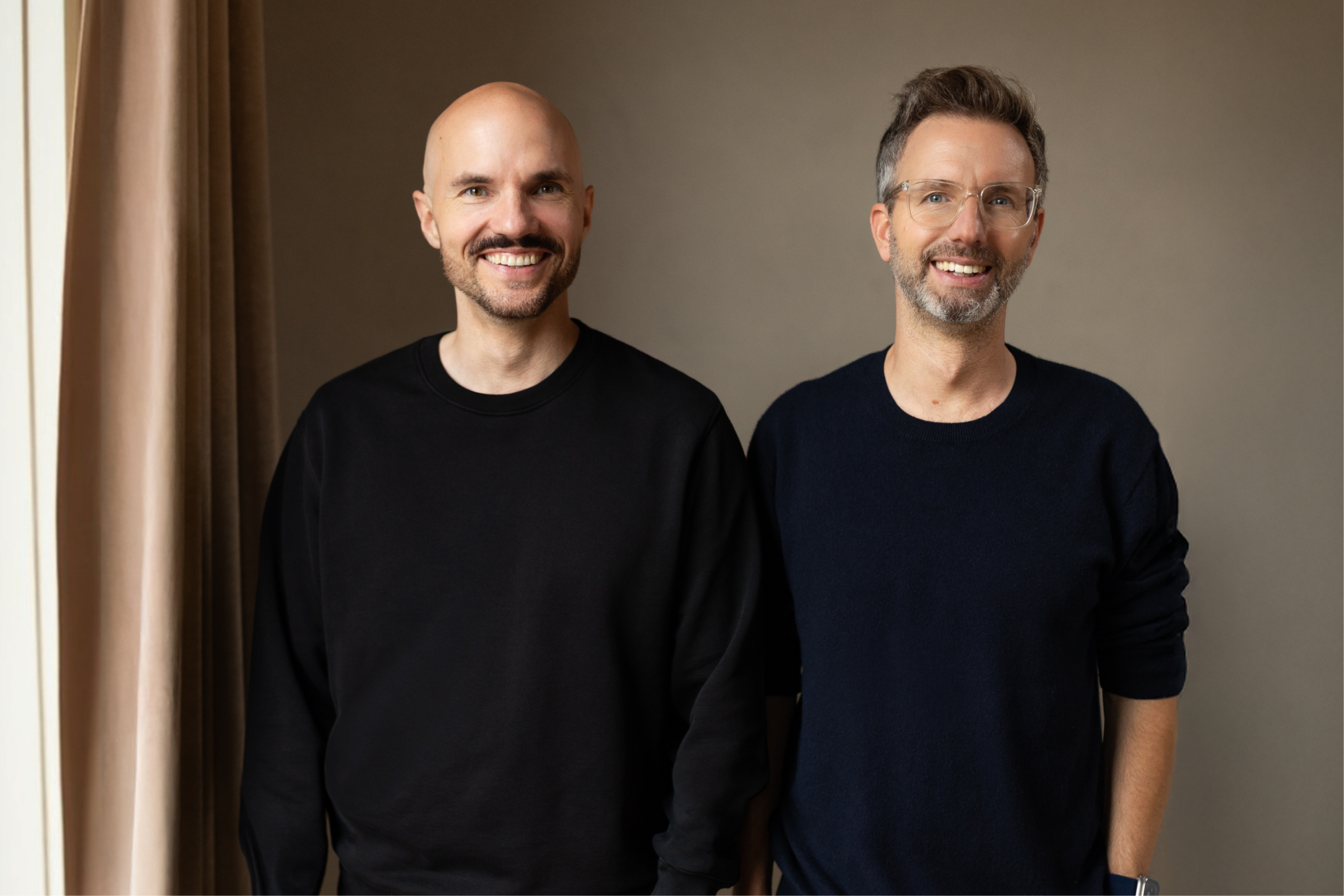

The biggest bottleneck in the AI stack and FMC’s solution – Interview with CEO Thomas Rückes
News Article
With a €100 million financing, FMC recently completed one of the largest investment rounds in the European semiconductor sector. The capital will be used to commercialise a novel memory chip technology that is expected to significantly reduce the energy consumption of AI data centres and set new standards for performance and efficiency. In this interview, CEO Thomas Rückes explains why memory has become the central bottleneck in the AI stack, how FMC is addressing this technologically, and what role Europe can play in the global competition for the next generation of AI infrastructure.
Congratulations on the successful completion of the financing round! What does this financing mean for FMC and your growth strategy?
With the fresh capital, we can consistently implement our product roadmap. We develop highly advanced computing systems – from our own chips to complete hardware and software solutions to integrated computing systems for AI data centres and edge applications.
The recent financing not only enables us to bring these technologies to market, but also to build on them to establish revenue and corresponding P&L structures. This allows us to build targeted business units and thus drive FMC’s growth in a sustainable manner.
Memory chips are considered the biggest bottleneck in the AI stack. Why are they so crucial for AI data centres – and how is FMC addressing this problem?
In the hardware architecture of an AI data centre, processors such as GPUs and CPUs – from NVIDIA or Intel, for example – work closely with the memory. Within a server, these computing units are connected to DRAM via electrical connections. This memory is very fast, but volatile.
Optical connections are then used to access NAND storage, some of which is also located in the cloud. This is significantly cheaper and non-volatile, but much slower. Every time data is moved between chips, compute, memory and storage, the available bandwidth decreases, latency increases and energy consumption rises. In data centres in particular, very large amounts of data are constantly being moved back and forth. This chip-to-chip communication is therefore one of the central bottlenecks for both the performance and energy efficiency of modern AI data centres.
Your DRAM+ and 3D-CACHE+ technologies are designed to increase system efficiency by more than 100%. What makes your solution fundamentally different from established products?
The key point is that we achieve the required computing power without having to constantly move data back and forth between different chips. The more information that remains in the same chip, the faster the overall system becomes and the lower the energy consumption. This is exactly where our technology comes in.
With our chip, we make DRAM memory non-volatile. This results in significantly less data traffic between compute, memory and storage. Since our memory can also perform more functions directly in the chip, we massively reduce chip-to-chip communication. This leads to a significant increase in performance and efficiency in AI data centres.
There is currently no such solution on the market in this form. Our approach is correspondingly disruptive, especially with regard to AI data centres, which are currently the most complex and powerful computer systems developed by humankind.
Many existing approaches attempt to improve communication between chips or between memory and storage via photonics or optical interconnects. While this reduces bottlenecks, it does not solve the underlying problem. Our approach goes one step further: we address the root cause and can actually solve the problem.
Europe has hardly any memory chip offerings of its own, while the market is dominated by the US, South Korea and Taiwan. How important is FMC for Europe’s technological sovereignty?
The problem is even more complex. The headquarters of the major manufacturers are mainly located in the US, South Korea and Taiwan. Although production also takes place in other regions, such as Taiwan, Singapore, Japan and China, there is virtually no corresponding manufacturing capacity in Europe.
FMC wants to play an important role here. We plan to launch our product on the market next year and then scale up in a targeted manner. Our clear focus is on AI data centres, and we are already in talks with European data centre operators and technology companies where we would like to introduce our storage solutions.
Our technologies can make a relevant contribution to value creation in Europe. They enable the construction of AI data centres with world-leading energy efficiency, i.e. very high performance with significantly reduced energy consumption.
What advantages does your Dresden location offer for your development?
Dresden offers us a major strategic advantage, and we plan to further expand our activities here. The region has the most advanced semiconductor ecosystem in Germany and one of the leading ones in Europe. Large fabs such as GlobalFoundries and Infineon are located here. This is very valuable because it makes it easy to hold face-to-face discussions and pragmatically advance issues.
Added to this is the high density of excellent research institutions, such as several Fraunhofer Institutes. With them, we can work on modular solutions in a very targeted manner. At the same time, the entire supplier ecosystem is in place: packaging companies, developers of sampling boards, software companies and many specialised smaller providers.
This interplay between industry, research and specialised service providers makes the location particularly strong. In other parts of Germany, there are individual elements of this, but in our view, the complete package with this depth and density can only be found in Dresden.
FMC was founded in 2016 and has developed into a leading player in less than ten years. What hurdles did you have to overcome on the way from research to global commercialisation – and which milestones were decisive?
I myself was not involved yet when the company was founded, but joined FMC a few years ago with the clear mandate to transform the developed technology into marketable products and build FMC as a global semiconductor company. FMC was founded as a spin-off from the university and was strongly influenced by a research mentality in its early stages.
We had to learn important lessons in the early projects. Just because a device works well technically, it does not mean that it will automatically result in an attractive product that customers are willing to pay for. On this basis, the technology development approaches were adapted and steered towards much clearer, market-relevant technology tracks.
Such pivots are almost the norm for hard tech and emerging memory companies. The focused development of a technology into a new, clearly defined application takes time.
Over the past two years, we have been able to develop specific products. However, this also requires significantly more capital. That is one of the main reasons for the large financing round that we have now completed. At the same time, we are building a team of highly experienced semiconductor experts and product professionals who are not only capable of developing these highly complex systems, but also of bringing them to market in a cost-effective manner. This is precisely where we are now taking the next decisive steps.
What role did HTGF play as an early investor in your development?
HTGF was the first institutional investor in FMC and played a key role, especially in the early stages of the company. Yann Fiebig closely supported the founding team as a member of the advisory board and, among other things, assisted with the structuring and negotiation of the IP agreement with the university: a crucial step for later scaling.
In addition, HTGF contributed significantly to laying the foundation for further financing rounds. This led to contact with the lead investor of Series B at the HTGF Family Day, which marked an important milestone in our growth phase.
HTGF has closely accompanied FMC from the early technological idea onwards, and with the current financing round, DTCF and other strong partners are now joining us to drive forward the next phase of our growth and global scaling.
What’s next after the €100 million financing?
The focus is now on product qualification and the cost-efficient commercialisation of our technologies. The goal is to achieve our margin and revenue targets and, building on that, to consistently scale the company. This will lay the foundation for establishing FMC as the world’s leading provider of memory solutions from Europe for the global market.
What have you personally learned from this journey as a start-up CEO in a deep tech industry?
This isn’t my first rodeo. I try to consistently apply the experience I have gained in the global semiconductor industry since 2001 to build FMC in the best possible way. I have learned my lessons and now it’s a matter of putting them into practice and building a really good company, and so far, this path is going according to plan.
What advice would you give to other founders who want to start up in deep tech sectors?
Deep tech is significantly more complex than many traditional software products, for example. Unfortunately, it is very easy to invest a lot of capital and end up with limited results because you are navigating a technological maze where you have to think many steps ahead.
The development of deep tech and semiconductor products in particular is extremely capital-intensive and requires close cooperation between many internal and external partners. Building such a product is about as complex as developing a new car. It requires a clear plan, strong structures and professional project management. Structures that are more commonly found in larger companies. At the same time, you have to establish these processes in a start-up without losing the necessary flexibility and speed.
My advice to founders is therefore: work with maximum commitment, but surround yourself early on with the right experts who really understand the industry and learn from them. It is crucial not only to work on problems, but to work on the right problems and with the right timing.
Thank you very much, Thomas, for your time and insights!

I am your contact
for all press inquiries:
Tobias Jacob
More News
 zum Artikel
Finches Raises €2 Million Pre-Seed Funding for AI Early-Warning-System in Agricultural Sourcing
 zum Artikel
TODAY Secures €2.8M for its Agentic AI Platform that accelerates Financial Advisors’ growth with compliant agents.
 zum Artikel
Zymofix to build flagship microbial manufacturing plant as it takes solid-state fermentation to industrial scale
 zum Artikel