Rethinking Law: The AI That Does the Work
Story
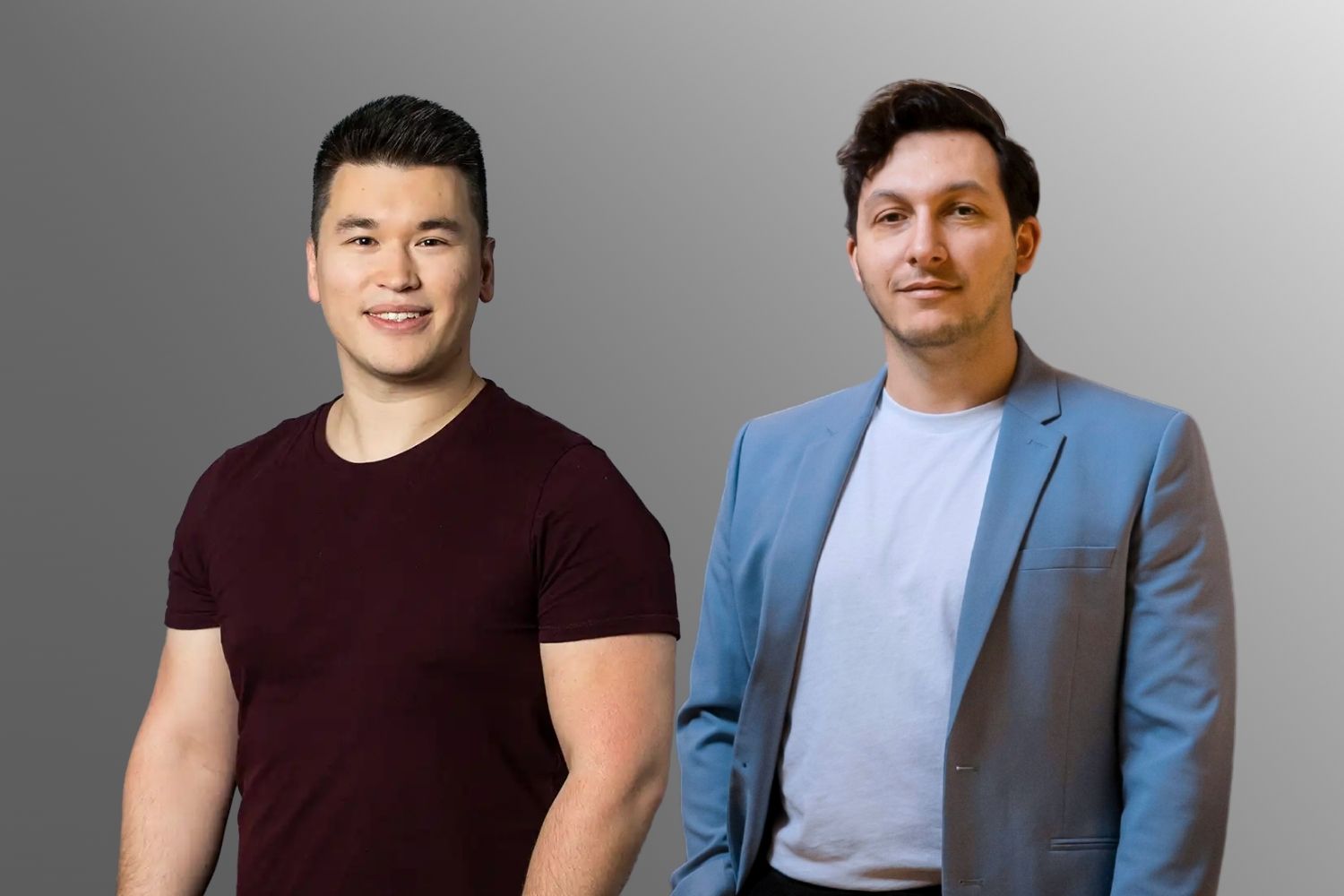
Interview with René Fergen, Co-Founder and CEO of JUPUS, and Max Bergmann, Investment Manager at HTGF
JUPUS has just raised 13 million euros, quadrupled its ARR last year, and processes more than 2,000 new cases every day – more than any single law firm in Europe. The Cologne-based startup has developed Europe’s first AI secretarial service for law firms: an AI that does not merely assist, but works autonomously. Behind it lies a structural problem that many underestimate – and a partnership that started with the very first conversation. We spoke with co-founder René Fergen and HTGF Investment Manager Max Bergmann about how it all came together – and what comes next.
René, why are law firms under so much pressure right now – and why can’t a job posting solve it?
René: More than 50 percent of the work in a law firm is not done by lawyers, but by legal assistants. And that profession is dying out. Over the past 30 years, the number of lawyers has tripled, while the number of newly trained legal assistants has fallen by more than 70 percent. In Berlin, 88 people started the training last year – for a city with more than 12,000 lawyers.
A job posting does not solve this, because there is no one left to apply. The result is that lawyers take on fewer cases, work more, and earn less – until running a firm is barely economically viable. In the future, someone will have to do this work, and it can no longer be people. That is exactly the gap we fill.
Max, how did you first come across René and Jannis – and what convinced you back then?
Max: We had an early conversation with René quite soon after he started. He is someone who, in a conversation, gives you the feeling that he truly understands his market. Shortly after, we received an introduction through an investor in our network – and at that point it was clear: this is worth looking at more closely.
What convinced us was the combination of team, market, and early traction. René understands the target group, and Jannis brings founding and exit experience as CTO. The early backing from the right people was also a strong signal – the chairman of the Legal Tech Association Germany and Felix Plog, formerly COO at Enpal, were already on board as angels. And the structural tailwind was clear: more and more lawyers, but a massive collapse in new legal assistants coming through.
René, why did you choose HTGF – what were you hoping for from this partnership, beyond the capital?
René: A key factor was HTGF’s broad network. Access to contacts, fellow founders, and potential partners saves an enormous amount of time at this stage and opens doors you would otherwise have to knock on one by one. On top of that, we wanted a partner who understands the German B2B market and shares the ambition.
“AI secretarial service” sounds ambitious – René, what actually happens when a law firm starts using JUPUS?
René: In concrete terms, the JUPUS AI takes over the work that a legal assistant would otherwise do – autonomously and around the clock. Calls are answered, clients are qualified, appointments are booked, files are created, documents are drafted, client communication is handled. The AI does not just assist – it executes tasks independently and delivers them ready to use.
For lawyers, that means more cases handled with the same team, without filling a role they cannot fill anyway. Clients do not buy us as software – they buy us as a replacement for staff they cannot find. Today, we work with more than 2,000 lawyers daily, processing more cases than any single law firm in Europe.
Global players are now announcing their own legal products. Does that worry you, René?
René: No, and the reason is data. A foundation model provider can deliver excellent general capabilities, even legal-adjacent features. What it does not have is real data from the day-to-day work of law firms. And that is precisely what determines whether an AI cannot just describe a task but execute it reliably.
We are building one of the largest legal datasets in Europe, with millions of real case records seen – the complete chain of action from hundreds and soon thousands of law firms. The more firms use JUPUS, the better the system gets. A generalist cannot close that gap on the side, because they simply do not have the data.
Max, how do you see the role of specialised solutions like JUPUS compared to the large generalist players?
Max: The market is showing that specialisation matters, especially in regulated industries. Generalist models can assist; specialised ones can act. Law firms operate under attorney-client privilege, GDPR, and professional conduct rules. Building for that is not a feature – it is the foundation. That takes years and real domain knowledge to get right, and it creates a moat that a generalist cannot replicate overnight. The big players entering the space validate the market. But depth wins it.
Max, you have backed JUPUS across Pre-Seed, Seed, and now Series A. What has changed along the way – what has impressed you?
Max: What has impressed me most is that René and the team have brought the same clarity and ambition across every round – it has not worn off, it has sharpened. They know exactly what they want and where they are going. And that clarity radiates outward.
You see it most clearly in the team they have built over the past year. People from Doctolib, DeepL, Google, and sevdesk – people with plenty of options – have consciously chosen JUPUS. That does not happen by chance. It is the result of a compelling vision that attracts and retains top talent.
René, what has working with Max and HTGF actually delivered – is there a moment you could point to?
René: The greatest value was not any single piece of advice, but the fact that Max brought the same clarity we had across all three rounds – and stayed calm in the moments that mattered most. He was always there when we needed him. He made connections that helped us enormously, for example in hiring. He never took the decision away from us, but he asked the right questions so we could decide faster and more clearly.
13 million euros – what exactly for, and where will JUPUS be in two years, René?
René: Scale the sales team, develop the product further, and defend the data advantage. We grew more than fourfold in 2025. Now we are accelerating. In two years, we want to be the clear market leader in Germany and have launched our European expansion.
Max, what does this round mean from an investor perspective – what does it say about the LegalTech market?
Max: It shows that the European LegalTech market has been underestimated for a long time – and that is changing now. The EU Data Act is breaking up the lock-in of legacy providers, and AI adoption in law firms is rising fast. In moments like this, the next ten years are decided.
The race is not over. In the legal market, data sovereignty is becoming a real differentiator: firms are increasingly aware of whose systems are processing their client data. A European provider has a structural advantage over US-based generalists – and specialised vertical AI players with proprietary data from real workflows are building a moat that no generalist can simply close.
What would you tell founders entering a regulated, risk-sensitive market like Legal, René?
René: In a regulated market, it is not the best technology that wins – it is the deepest understanding of the customer. Build for the real reality of your users, not for the demo. For us, that means radical simplicity for non-technical lawyers, because every layer of complexity is a reason not to switch. And move fast anyway. Regulation is not a reason to hesitate – it is often exactly the window in which a market reorganises itself.
What have you each learned – René as a founder, Max as an investor – that you wish you had known from the start?
Max: As an early-stage investor, you never have complete information – and you still have to decide. With JUPUS, it was team and market understanding that convinced us. Beyond that, I have learned how much availability matters: the greatest value often does not come from formal meetings, but from the conversations in between – when a quick read or a contact is needed right away.
René: The hardest part is not the technology, it is the clarity about what you deliberately do not build. Large clients will always come with requests for complex custom solutions. The question we always asked ourselves was: does this short-term revenue actually move us closer to our long-term vision, or does it extend the journey? The answer was almost always no. I wish I had understood earlier that fast, clean rejection is one of the most valuable skills a founder can have.
Thanks, René and Max, for the insights!
Do you want to
learn more?
I am your contact
for all press inquiries:
Tobias Jacob
More Stories
 zum Artikel
Europe’s Fusion Champion Comes of Age: Proxima Fusion Raises €411 Million for Alpha, Its Net-Energy Fusion Demonstrator
 zum Artikel