

Europe Builds Again as Fusion Moves from Lab to Grid: Proxima Fusion on its way to strengthening European energy sovereignty
News Article
For decades, fusion has been the ultimate scientific promise—clean, virtually limitless energy, always a few breakthroughs away.
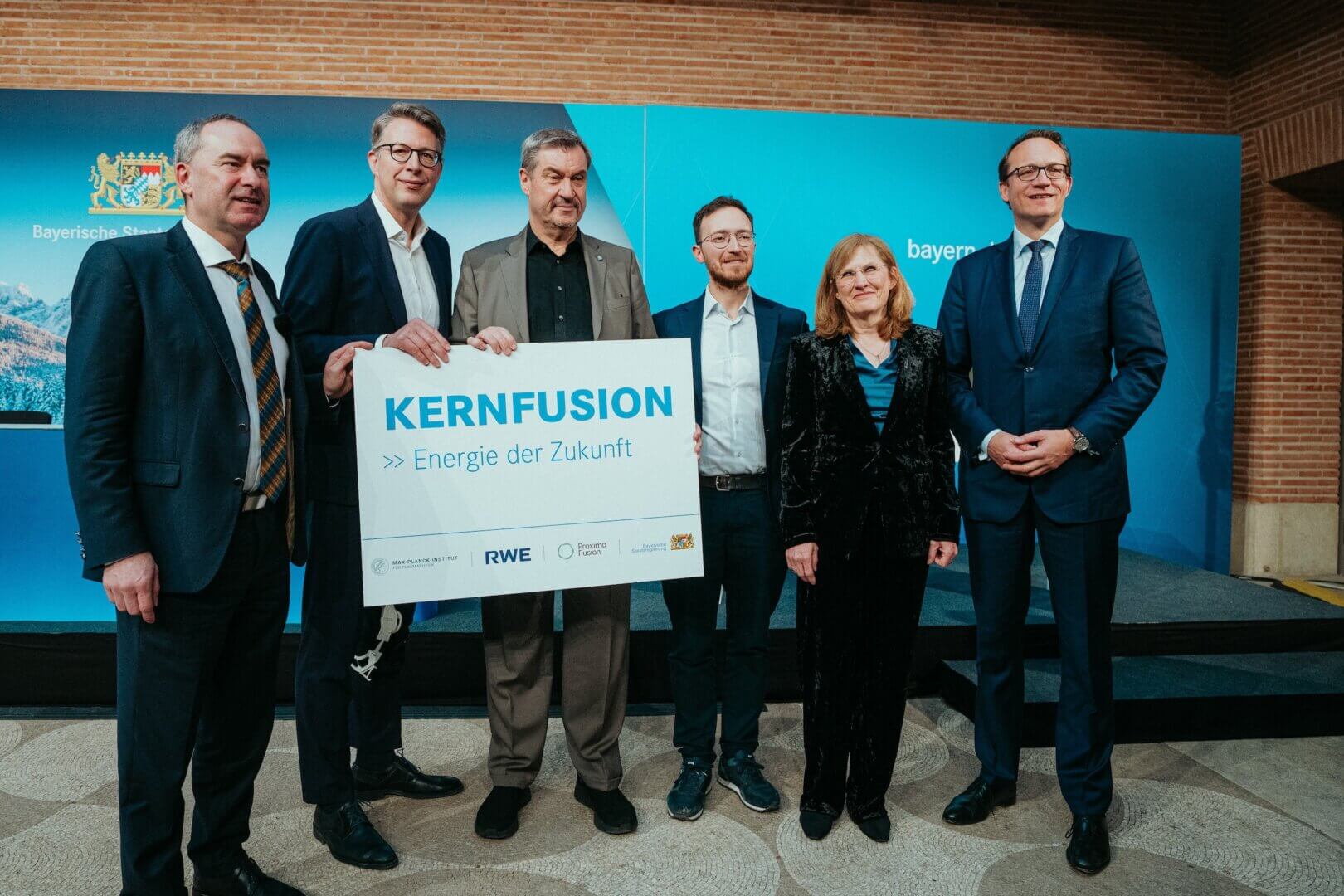
Today, that promise takes a tangible step toward industrial reality: Proxima Fusion has signed a landmark agreement with RWE, the Free State of Bavaria, and the Max Planck Institute for Plasma Physics to develop what could become Europe’s first grid-connected commercial fusion power plant based on advanced stellarator technology.
This is not just another research collaboration. It is the beginning of an industrial roadmap: first the Alpha demonstrator in Garching, designed to achieve net energy gain in a stellarator for the first time; then Stellaris, a commercial power plant planned for Gundremmingen that would feed fusion-based electricity directly into the grid. This marks a historic shift from scientific excellence to energy infrastructure.
Fusion as a Sovereignty Project
While this is about clean energy, it is also about sovereignty. Unlike fossil fuels, fusion does not rely on imported resources. Unlike nuclear fission, it produces no long-lived radioactive waste. And while other emerging energy technologies are advancing rapidly and will play critical roles in Europe’s transition, fusion stands out because Europe is not starting from behind. It brings decades of world-class research and scientific depth. The Max Planck Society’s Wendelstein 7-X stellarator, one of the most advanced fusion experiments in the world, has laid the scientific groundwork. What has been missing so far is not physics but industrial execution at startup speed.

“This MoU is a milestone that visibly positions the European fusion industry on the global stage,” says Francesco Sciortino, Co-Founder and CEO of Proxima Fusion. “It marks the starting point of an industrial ecosystem that consolidates existing and new know-how in Europe and anchors value creation here. This marks the beginning of a long-term industrial growth trajectory over the coming decades, creating new export opportunities for Germany and Europe.”
Alpha and Stellaris are expected to create thousands of jobs and activate supply chains across advanced manufacturing, superconducting magnets, power electronics, and complex plant engineering. For the first time, Europe’s fusion capabilities are being consolidated into a concrete engineering project designed for commercial deployment.
From Spin-Out to Industrial Scale
Proxima’s journey reflects what European deep tech can look like when long-term capital meets scientific excellence.
HTGF supported the company from its earliest days as a Max Planck spin-out. DTCF joined at seed stage and played a key role in structuring the record Series A financing in 2025, bringing growth capital at the moment when ambition needed acceleration.
“If we want to build new industries in Germany and secure sustainable growth, we must think big and finance key technologies with conviction,” says Johannes Weber, Principal at HTGF. “Fusion has the potential to fundamentally reshape Europe’s energy system. This milestone shows how research can translate into real value creation.”


Dr. Torsten Löffler, Investment Director at DTCF, adds: “Fusion is one of the most ambitious technological endeavors of our time—and one of the greatest opportunities for Europe’s industrial future. Today’s milestone shows how Proxima is moving from research toward building a real energy industry.”
Europe Builds Again
The agreement establishes a framework that combines public and private capital to move fusion from laboratory physics to industrial reality. Bavaria has signaled substantial state co-financing, subject to federal funding, while Proxima and its partners are mobilizing private capital and industrial expertise.
It is still early. Fusion remains technically demanding and capital intensive. But for the first time, Europe is not only researching fusion, it is preparing to build it.
This step is supported by a clearly defined public-private financing approach. Proxima intends to finance approximately 20 percent of the project’s total costs through private international investors. Subject to federal funding, the Free State of Bavaria has indicated a potential state co-financing contribution of 20 percent. RWE has also signaled its willingness to participate financially within the framework of the MoU.
Proxima Fusion is a powerful example of how Europe can once again take on large-scale strategic technologies, building new value chains, new competencies, and a credible path toward long-term energy sovereignty.
We congratulate Francesco and the entire Proxima team on this milestone and are proud to continue supporting their journey as long-term investors.
Press Material
Official Statement from Proxima Fusion (External Link)
Official Press Release (English; PDF)
Official Press Release (German; PDF)

I am your contact
for all press inquiries:
Tobias Jacob
More News
 zum Artikel
Europe Builds Again as Fusion Moves from Lab to Grid: Proxima Fusion on its way to strengthening European energy sovereignty

 zum Artikel
Growth turbo for the heating transition: nuuEnergy raises €4.3 million to revolutionise the heat-pump market with craft expertise
 zum Artikel