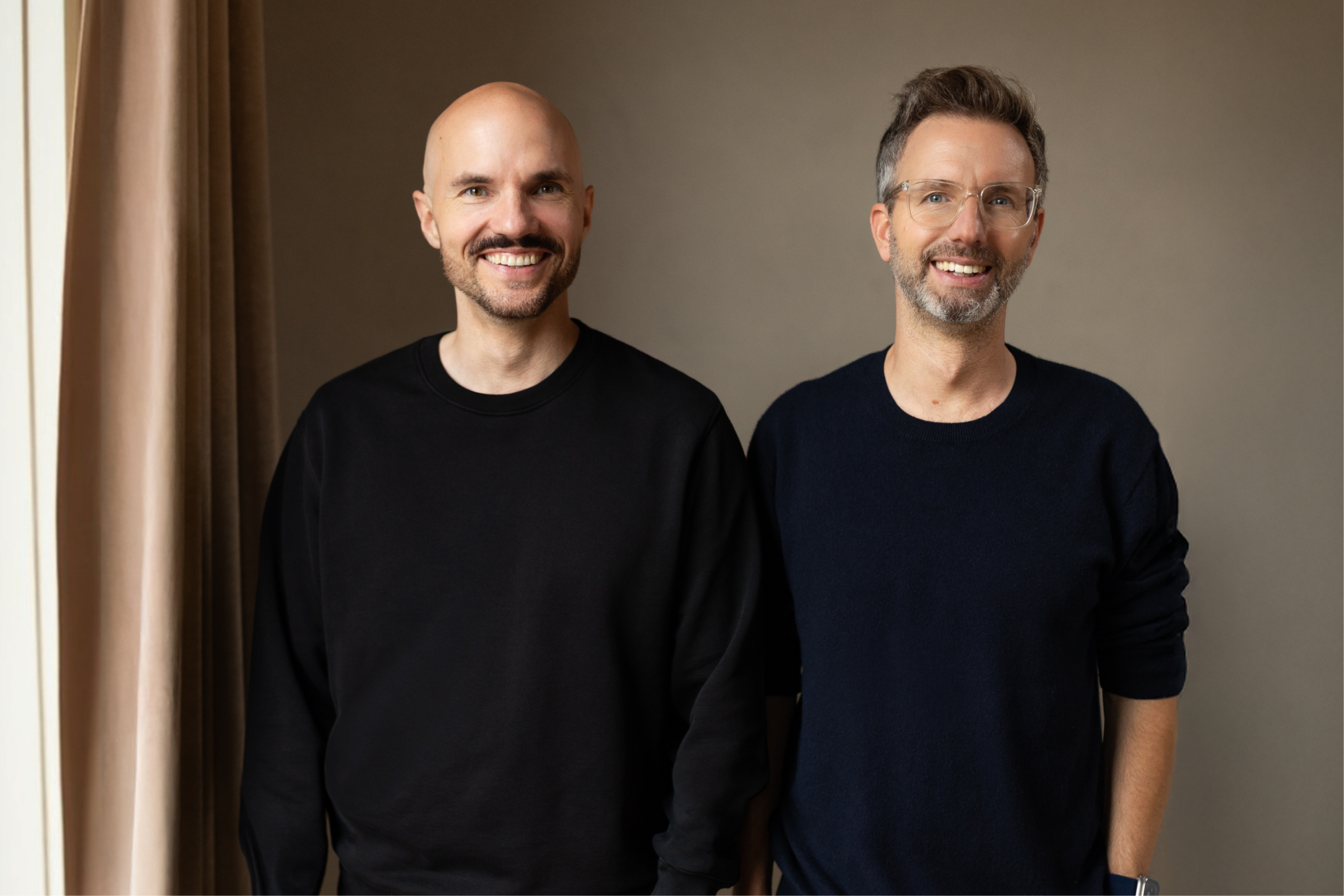
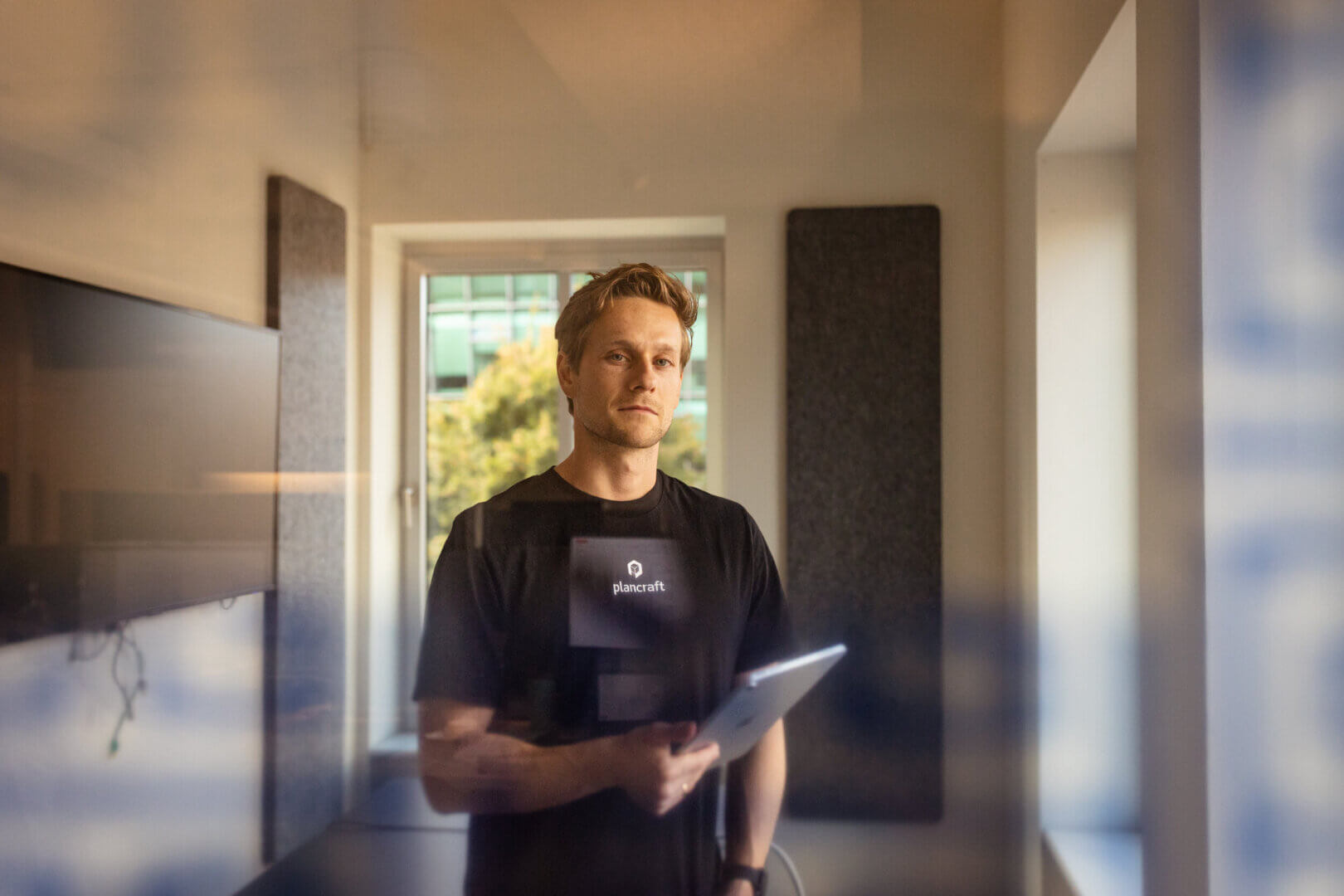
“Complex work becomes a simple voice command” – Interview with Julian Wiedenhaus on Plancraft Series B
News Article
Amidst a shortage of skilled workers in the construction industry and increasing demands due to climate targets, plancraft is focusing on digital solutions that make craft businesses more efficient and rethink processes. We spoke with Julian Wiedenhaus, CEO of plancraft, about AI in the skilled trades, European expansion, and scaling after the €38 million Series B.
TL;DR: Plancraft after Series B – The 5 most important insights
- Expansion into 5 countries (NL, IT, ES, PL, DE) with dedicated teams.
- The Netherlands is the most experimental – tradespeople across Europe have the same pain points: too much paperwork, lack of overview. However, the mentality regarding innovation and its adaptation varies.
- Culture needs active leadership – leading by example, fixed rituals, and constant investments (events, workations) allow #stoked #together #humble to scale as a culture.
- Digital foremen coordinate the business – AI co-workers will take over quote, invoices, telephony, time recording, and construction site documentation for ~20,000 craft businesses in the future, saving up to 8h weekly.
- Vision 2028: European standard – Plancraft as the backbone for construction and crafts, digital foremen on every construction site, measurable climate impact through efficiency gains with AI, and greater adaptation of technology through generational change
Congratulations on your Series B! What specific milestones has Plancraft already achieved before and after the €38 million Series B?
Thank you! Looking back, there were three clear successes: the biggest milestone was that we exceeded 20,000 customers, for whom we create freedom every day in the skilled trades. In addition, we scaled plancraft dramatically and allowed it to mature, so another important milestone for us was reached when our organization was complete. We filled all positions in our management team – including the VP layer – and built a strong go-to-market team with four heads of sales, marketing, customer success and revenue operations. This was crucial in transforming Plancraft from a fast-growing startup into a scalable company.
At the same time, we started our European expansion: we now have our own employees in the Netherlands, Italy, Spain, and Poland. This has laid the foundation for establishing our trades software as a truly European platform for the construction and trades industry.
You focus strongly on AI. Which application will be the first to really help tradespeople in their everyday work?
For trades businesses, every minute spent in the office means lost value creation. Our greatest leverage therefore lies in the digital foreman—an intelligent co-worker who takes over office work, thinks, and learns along the way. Just as we have two core user groups—back office and construction site—the tangible benefits also vary:
In the back office, the digital foreman takes care of routine tasks such as quotes, invoices, telephony, documentation, and digital time recording. It thinks along with you, automatically structures projects, and thus saves many hours of administrative work.
For construction site users, the digital foreman should literally be on call in their pocket: craftsmen can use voice commands to generate reports on their working day or call up information from their projects – for example: “What material is specified in the service specifications for the vapor barrier on the roof?”
This turns complex office work into a simple voice command – and that’s a real relief in everyday life. What’s particularly exciting is that in the skilled trades, the best specialists are often also managing directors or master craftsmen who already have too much responsibility. By reducing their overhead hours, we free up valuable time for the construction site, the team, and customers.
So, you are now active in countries such as the Netherlands, Italy, and Austria. How do craft businesses in Europe differ in their attitudes toward digitalization and AI?
Yes, especially in terms of openness to new technologies. We see the greatest willingness to experiment in the Netherlands, where things are quickly tried out and scaled up if they work. In Germany, the demand for accuracy and data quality is higher, which often makes implementation more thorough, but also somewhat slower.
Despite these differences, the same applies everywhere: everyone realizes that they need digital solutions. The problems are very similar—too much time spent in the office, complex planning and organization of teams and construction sites, and a lack of overview in everyday life. And everyone wants the same thing: simple, easy-to-learn craftsman software that really reduces the workload.
When you talk directly to tradespeople on the construction site, what specific insights do you gain?
Above all, how different the challenges really are – depending on the trade, size of the business, or technical openness. I listen carefully to where time is still being lost, despite digital support. These conversations are invaluable to us because they show whether our ideas really work in everyday life.
But I also learn a lot about how companies involve their employees, what media they consume, and which influencers they follow. This helps us understand who they trust today—and how we can best reach them in their reality.
Ultimately, tradespeople don’t want new tools for the sake of tools, but peace of mind—and construction software that noticeably saves them time.
Your team has grown massively in a short period of time. How did Plancraft scale its team from 40 to over 100 employees within a year? What specific mechanisms do you use to preserve your corporate culture?
Culture doesn’t just happen on its own – it has to be actively lived and consciously nurtured. That was one of the biggest insights we gained during the last growth phase. Even though culture often sounds vague, we make it explicit: through clear values, fixed rituals, and constant reference to our strategy and goals.
The most important thing remains: leading by example. Culture stands and falls with the behavior of the leadership team – but it only comes alive when each person takes responsibility for it.
We constantly invest in culture – with team events, workations, and workshops that create space for connection and exchange. Because the bigger we get, the more important it is to consciously maintain closeness, trust, and our vshared energy.
What role do you want Plancraft to play in achieving climate goals? Where do you see the trade and construction industry in three years?
Our customers are the biggest lever for climate change. They build, renovate, modernize – and thus make direct decisions about energy efficiency and resource use.
When our craftsmen’s software reduces office work, avoids empty runs, and minimizes construction errors, we create space for precisely this work. Every hour we give back to craftsmen can be put into climate-friendly construction.
In three years, we see Plancraft as the European standard for construction and craft businesses – and the digital foreman as an integral part of every construction site. The generational change that has already begun will lead to the closure and consolidation of craft businesses, but also to their faster digitalization. We see this as a great opportunity.
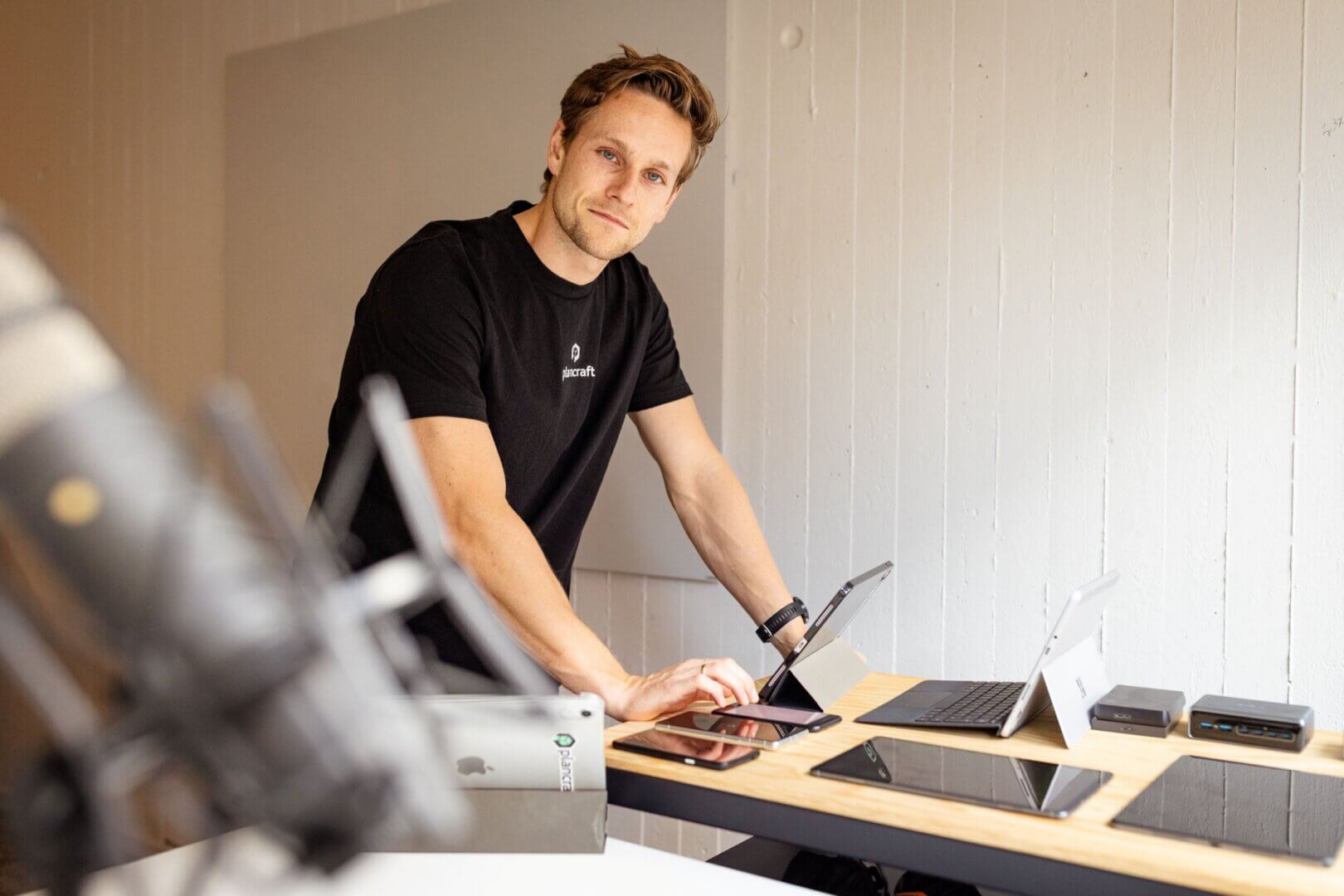
About Julian Wiedenhaus and Plancraft
Julian Wiedenhaus is CEO and co-founder of Plancraft, an AI-first craftsman software company based in Hamburg. Founded in 2020, the company completed a Series B financing round of €38 million in 2025, led by Headline, HTGF, and Creandum. Plancraft employs around 120 people and serves approximately 20,000 skilled trades businesses in Europe.
Plancraft positions itself as the “European Contractor Operating System” – an AI-first SaaS platform for tradespeople. The software digitizes key processes such as quote calculation, digital time tracking, construction site documentation, and team communication. With its “digital foreman,” Plancraft relies on an AI co-worker that automates office work and gives tradespeople more time for their core work. The company is active in Germany, the Netherlands, Italy, Spain, and Poland with its own employees and continues to expand in Europe.

I am your contact
for all press inquiries:
Tobias Jacob
More News
 zum Artikel
Finches Raises €2 Million Pre-Seed Funding for AI Early-Warning-System in Agricultural Sourcing
 zum Artikel
TODAY Secures €2.8M for its Agentic AI Platform that accelerates Financial Advisors’ growth with compliant agents.
 zum Artikel
Zymofix to build flagship microbial manufacturing plant as it takes solid-state fermentation to industrial scale
 zum Artikel