
TrustNXT: What Makes Data Trustworthy for Autonomous Systems?
Story
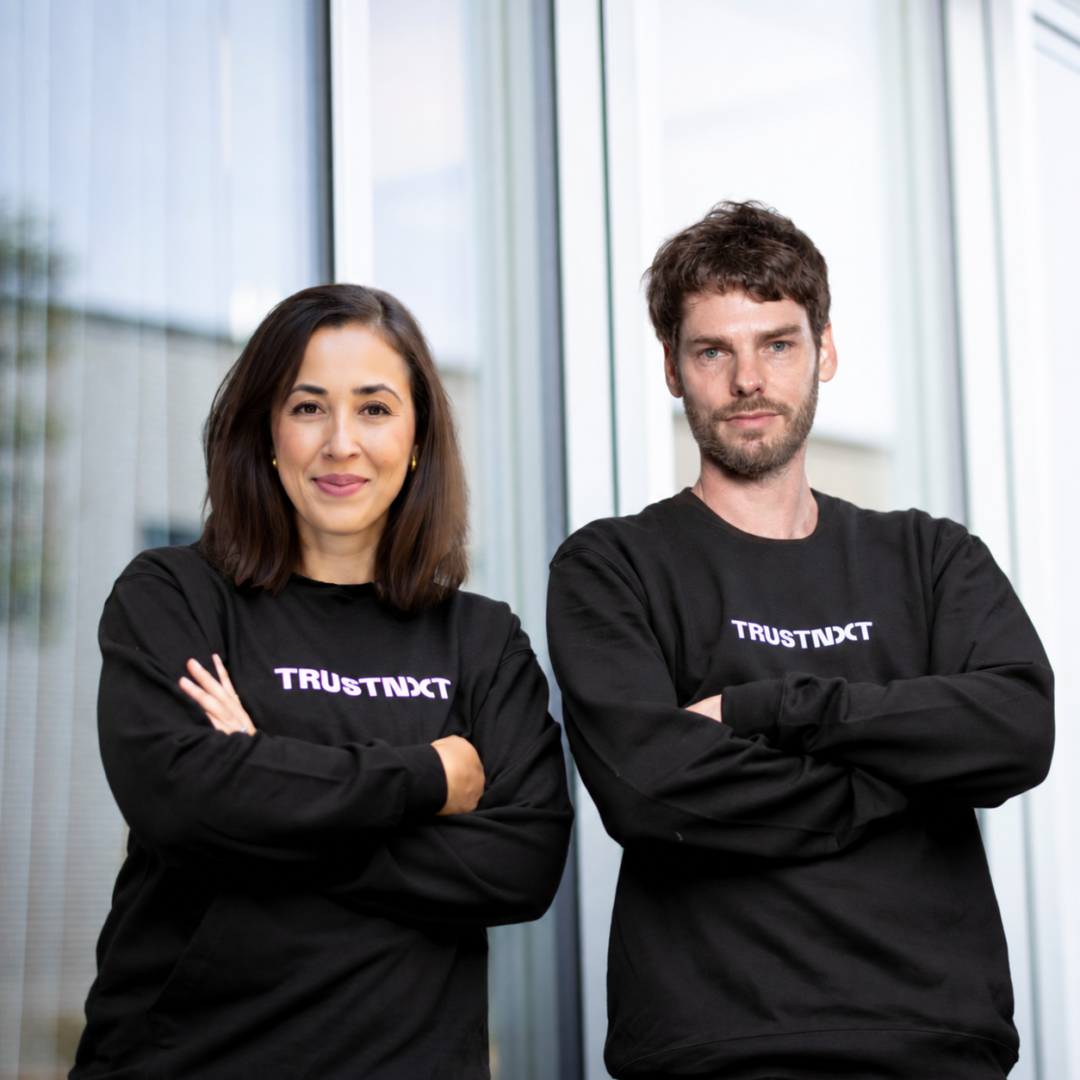
When AI systems control robots or transport goods autonomously, the reliability of the data they rely on becomes a safety issue. Where did the data come from, was it altered, and what happened to it during processing? This is exactly where HTGF portfolio company TrustNXT comes in. The start-up is developing a “Trust Layer” for Physical AI — AI systems that perceive their physical environment and act within it. Its technology makes data provenance, integrity, and processing steps verifiable, creating a traceable data chain from the sensor all the way to the autonomous decision. In this interview, co-founder and CEO Ariane Scheer-Danielsson explains why TrustNXT has sharpened its focus on Physical AI, why trusted data is becoming increasingly important in robotics and logistics, and what she has learned along the way as a founder.
Ariane, when AI does not just generate content but controls machines, faulty or manipulated data can have immediate consequences. Can you give us an example?
Absolutely. Imagine a mobile robot moving autonomously through a factory, navigating between people, machines, and production areas. Using cameras and other sensors, it perceives its surroundings and decides, for example, whether to keep moving, avoid an obstacle, or stop.
If that data has been manipulated, if information is missing, or if it has been altered while passing through different systems, the robot may make a decision based on incorrect information. A digital data issue can quickly turn into a physical safety issue.
This is becoming increasingly relevant as robots work more closely with people and move beyond clearly separated, controlled environments. At the same time, it can be very difficult afterwards to prove which data a decision was based on and whether that data was authentic and unchanged.
This is exactly the gap we want to close with TrustNXT: by cryptographically securing data provenance, integrity, and processing steps and making them technically verifiable.
You are focusing TrustNXT on Physical AI. What led you to sharpen your focus in this direction, and why is now the right time?
At its core, our technology is about data integrity and provenance, so it can be applied across many different use cases. But during validation, one thing became very clear: the biggest impact is in environments where digital data directly drives physical decisions. That is why we sharpened our focus on Physical AI, particularly robotics and logistics.
At the same time, the market is moving in exactly this direction. Robots are increasingly leaving clearly defined, controlled environments and operating in open, dynamic settings where they interact autonomously with people, machines, and other systems.
This makes the underlying infrastructure more decentralized, with data from different sensors, devices, and manufacturers needing to work together reliably. The more autonomous these systems become, the more important one question becomes: can we trust the data they are acting on?
That is where we see the need for a solution that can provide tamper-proof data integrity.
You describe your solution as the “Trust Layer for Physical AI.” What does that mean, and how does it work in practice?
TrustNXT is developing a vendor-independent software Trust Layer for Physical AI. The technology has been built over several years of research and development. A significant part of that work originated at Basler AG, from which TrustNXT was spun off. Part of our patent portfolio also comes from this development work and has since been further advanced.
From a technical perspective, data is cryptographically secured as close to the source as possible. We then record relevant processing steps and transfers between devices, software components, and AI agents.
This creates a complete, immutable, and auditable Data Lineage from the sensor all the way to the autonomous decision. It makes it possible to verify where data came from, whether it was altered, and which processing steps it went through.
What gap do you close compared with existing security measures?
Existing security measures mainly protect devices, networks, identities, and access. That is essential, but it addresses a different question from the one we focus on.
A system can be properly authenticated, protected against unauthorized access, and encrypted end to end. But that still does not prove where the data originally came from, whether it had already been altered, or what happened to it afterwards as it passed through different processing steps.
That is where TrustNXT comes in. We add a trust layer at the data level to complement existing cybersecurity. Instead of securing only systems and access points, we create a reliable Data Lineage for the data itself.
This becomes particularly important when components from different manufacturers interact, data moves across multiple systems, and autonomous decisions are made based on that data. In open and decentralized environments, this is critical.
Where are you currently seeing the strongest demand: robotics, logistics, or critical infrastructure? Can you give an example of how far you have progressed in practical testing and how the value can be measured?
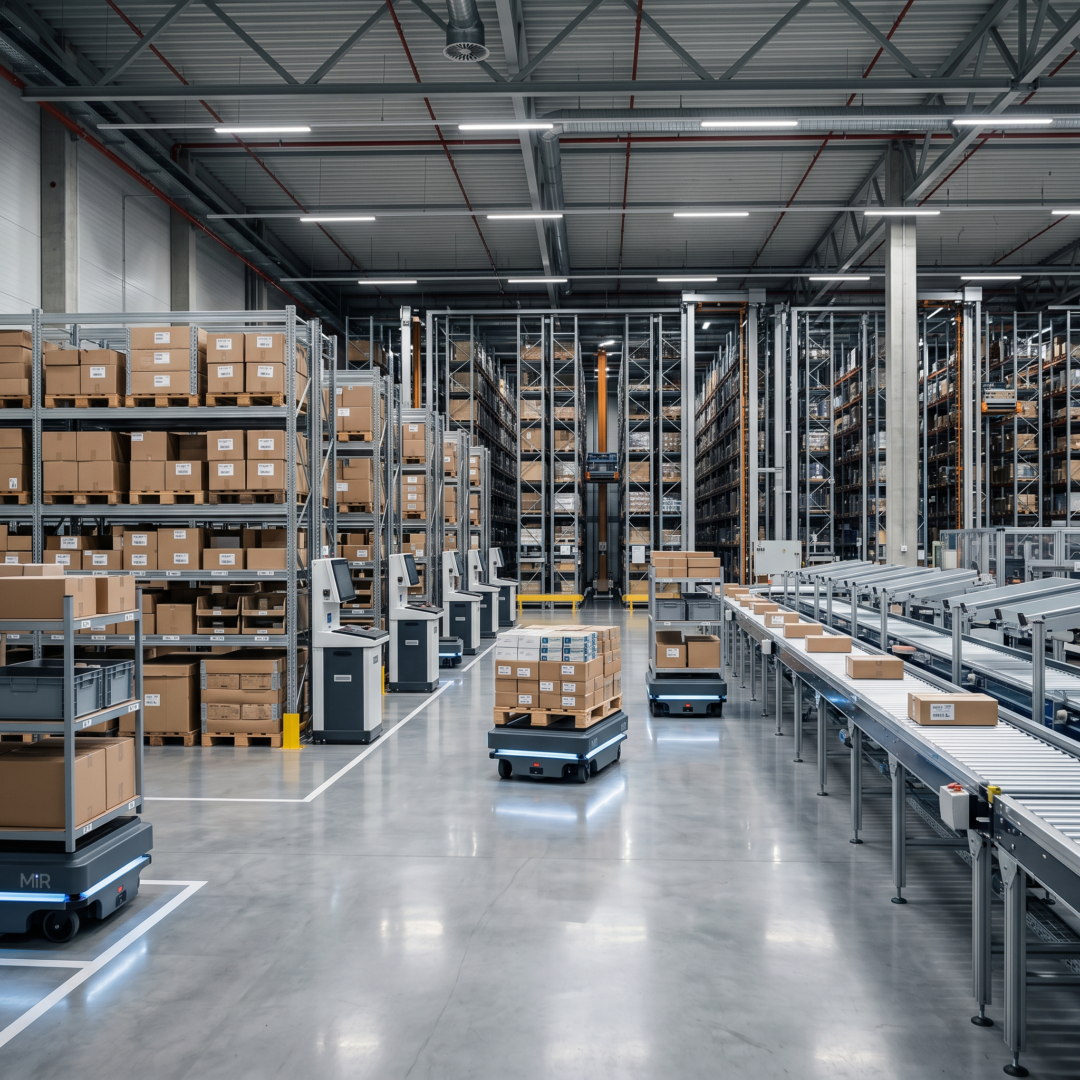
We currently see the strongest demand in robotics, particularly in AI-enabled vision. Cameras and other sensors are increasingly becoming the basis for autonomous decisions, for example when a robot detects a person, an obstacle, or an object and decides how to respond.
We are currently adapting our already validated prototype together with industry partners for these types of applications. TrustNXT secures the underlying data chain and makes it technically verifiable. This improves root-cause analysis and auditability and provides reliable technical evidence.
The same approach can also be applied to physical events in logistics. Handover events between people, vehicles, machines, and robots can be documented in a verifiable way.
This creates an end-to-end Chain of Custody that can reduce manual documentation, help resolve claims faster, and make it easier to determine responsibility in cases of loss or damage.
Which regulatory requirements are you seeing in customer conversations, and what role do they play in the decision to adopt your solution?
EU regulation in particular is becoming increasingly important. The focus is on requirements around traceability, data integrity, logging, and technical documentation, for example in connection with the AI Act, the Machinery Regulation, and the new Product Liability Directive.
TrustNXT addresses exactly the technical layer behind these requirements: the ability to reliably document which data an autonomous system acted on. We do this by creating a cryptographically verifiable Data Lineage.
Regulation therefore reinforces a need we already see from a safety, liability, and root-cause analysis perspective. If something goes wrong, it is not enough to know the final outcome of a system. You also need to be able to prove what the cause of that outcome was.
What role does HTGF play for you at this early stage?
HTGF is particularly valuable to us at this early stage because the team understands the longer development, validation, and sales cycles that come with Deep Tech.
For a company like TrustNXT, which works closely with industrial partners and needs to integrate new technologies into existing systems, that understanding is extremely important.
HTGF also brings a strong reputation and an exceptionally broad network, particularly within industry. For us, that means access to potential partners, pilot projects, and relevant decision-makers within large companies.
This combination of Deep Tech expertise, reputation, and industrial network is particularly valuable to us. And I also appreciate that the collaboration is not only supportive but also challenging. The uncomfortable questions are often the ones that help us most.
What do you wish you had known before founding TrustNXT, and what advice would you give to people who are considering starting a company themselves?
I wish I had understood earlier that strong technology does not automatically translate into commercial customers. Especially in Deep Tech, a solution can be technically compelling, but you still need to identify a problem that is urgent enough for companies to commit budget, time, and internal resources to solving it.
My advice would therefore be to work with potential users as early as possible and listen very carefully to understand where the real need is. You also have to become comfortable making decisions with incomplete information and adjusting your focus as you learn.
Despite all the challenges, I would choose this path again. Especially in Germany and Europe, we should do more to turn our strong research base and technological expertise into internationally successful companies.
That requires entrepreneurs who are willing to take risks and investors like HTGF who have the courage to back those journeys from an early stage.
Thanks for your insights, Ariane.
Do you want to
learn more?

I am your contact
for all press inquiries:
Tobias Jacob
More Stories


 zum Artikel
“From Cost Factor to Value Creation”: How traide AI and PwC Germany are Rethinking Customs

 zum Artikel