
Thinking digitally about school: How paddy wants to take the pressure off teachers
News Article
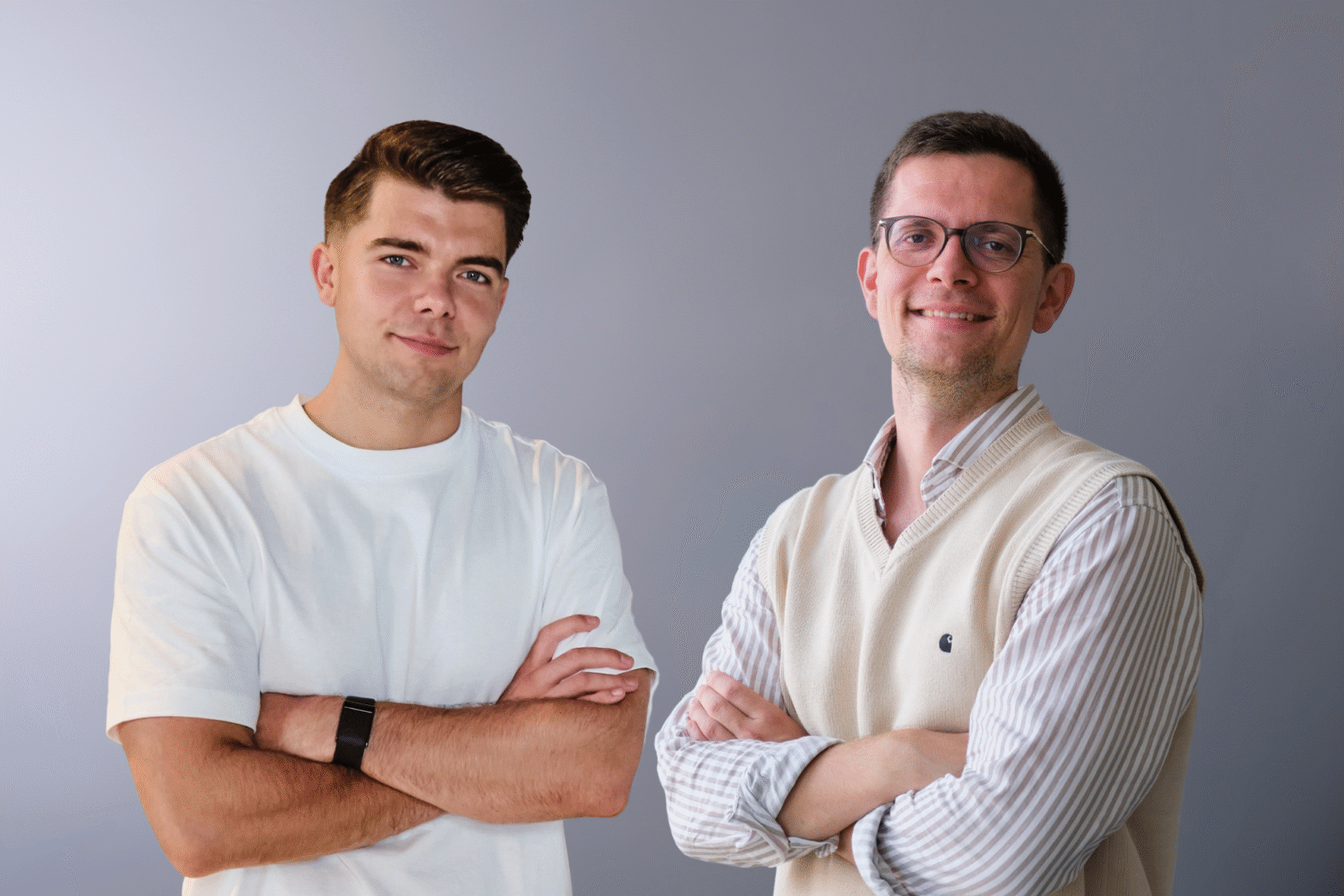
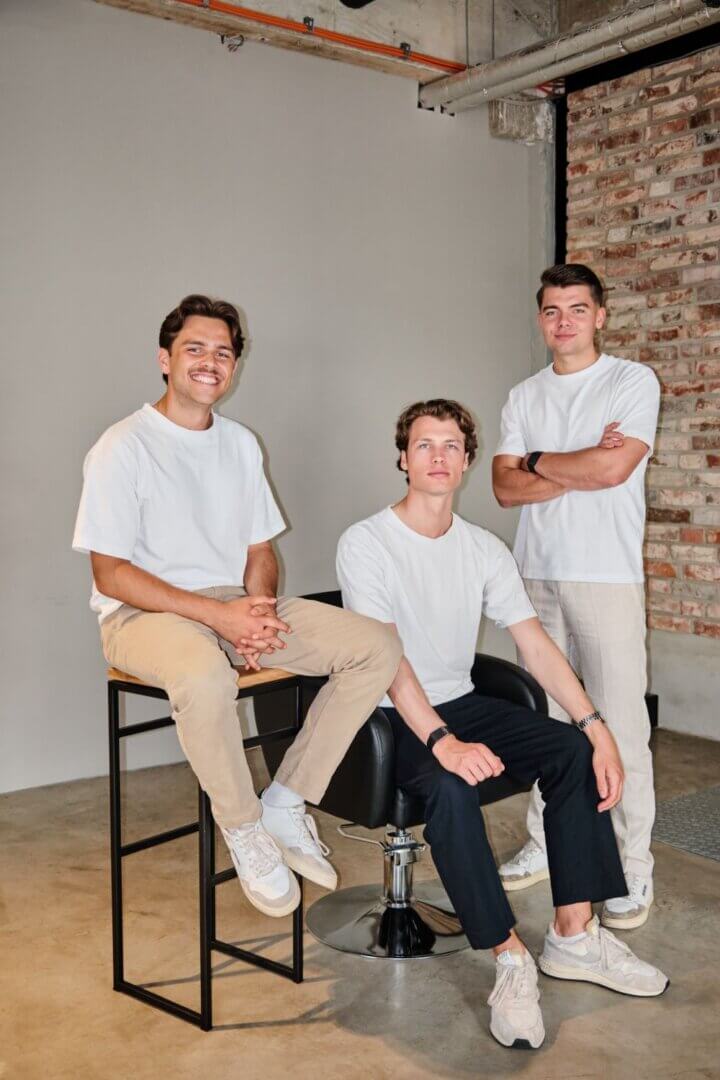
The founders of paddy know the challenges of everyday school life from their own experience. From the perspective of former students and with deep insight into the pressures faced by teachers, Matty Frommann, Lukas Portmann and Tobias Schröder have developed an AI platform that saves teachers time and enables more individualised support. We talked to Matty and Felix Assion, Investment Manager at HTGF, about the beginnings of paddy, the market potential of EdTech and a vision for the school of the future.
Matty, how did you come up with the idea for paddy? Were there specific moments during your school days that made you realise, “Something is wrong here, we need to change this”?
Matty Frommann: We actually started giving training courses for teachers when we were still at school. Most of us come from families of teachers. My co-founders’ parents are teachers, and so are some of my relatives. This meant that we were always aware of the challenges posed by digital media, but also issues such as workload and teacher shortages, especially during the coronavirus pandemic.
Many teachers now downright hate the topic of digitalisation because they say it’s an add-on that doesn’t help them. The existing software doesn’t solve the actual problem – and that was basically the founding idea behind paddy.
The pandemic was an accelerator. That’s exactly where we came in.
How did you meet? What was your first impression, Felix, when you met Matty, Lukas and Tobias?
Felix Assion: Matty had been in contact with HTGF for some time. My first conversation with Matty was at the beginning of March, and shortly afterwards we had our first joint pitch round. My first impression was that Matty is extremely professional, already has a great deal of domain expertise in the EdTech sector and showed healthy self-confidence throughout the whole process. A little later, I visited the team in Bielefeld and noticed the energy the guys had and how much structure they had already built up, especially in areas such as sales and go-to-market. For me, this visit was a game-changer and I knew that I definitely wanted to make this deal happen. After that, our collaboration picked up speed.
Matty, was it challenging to build trust, especially as young founders? Were there any reactions from teachers along the lines of, “What do they want to teach us?”
Matty Frommann: At first, we had a healthy naivety that drove us forward. That was great for getting started, and even afterwards, we actually benefited from being so young. People always believed that we had experienced the pain points ourselves as students, that we weren’t far removed from the situation, and that we could increasingly connect the two target groups – teachers and students. That was more of a door opener.
How do you see the market potential for paddy, Felix?
Felix Assion: That’s not an easy topic. EdTech or education, especially when it has a B2G component, is a difficult field – particularly from a VC perspective. The big hype of the Corona years is over. Statistically, there has been a sharp decline in investments or investment volume in this area year over year since 2022. But if you look at the education market, it is similar in size to insurance, health or even mobility. Historically, the market has also been quite capital-efficient. The ratio between valuation and the capital required is very positive in the education sector. I believe that paddy has extremely good timing. Teachers have gained initial experience with AI tools and are realising that the perfect dedicated solution for them does not yet exist. At the same time, pressure on this professional group is increasing enormously, as recent studies – such as those by the German Bitkom[1] – show. Matty knows more about this, but it is only since the coronavirus pandemic that we have had a situation where the hardware equipment is virtually ideal for such business cases. This means that everything is actually coming together perfectly. Personally, I am therefore very bullish about the next few years with paddy.
Matty Frommann: Historically, two types of EdTech cases have always worked well: either you go into a very niche market – for example, with a training platform for dentists – or you cover a wide range, such as with a cloud system for schools that everyone can benefit from.
I believe that with paddy and AI in general, we now can combine both and tap into a huge market. Every teacher supports each student individually as best they can, while at the same time reaching the masses.
What is your vision for schools in 10 years – and what role will paddy play in it?
Matty Frommann: Digitalisation and digital tools that support teaching will be the absolute standard. We are finally managing to connect all areas – lesson preparation, implementation and follow-up, backed up by data – and offer every student an individual learning experience. That is exactly where paddy wants to position itself.
I also believe that in 10 years’ time, we will be in a situation where technology will provide good answers to the foreseeable shortage of teachers and enable us to offer every student an individual learning experience.
What advice would you give to young founders? Are there any particular hurdles in the EdTech sector?
Felix Assion: In EdTech, perhaps more than anywhere else, having a great product just isn’t enough.
From an early stage, including in fundraising, you realise that the focus is shifting towards distribution, sales and go-to-market, and that you are expected to have experience and a clear strategy from the outset. This is why I advise teams to spend more time on this than they would in other industries, where an MVP and a pitch deck are often sufficient.
Saying that Paddy “raised €1 million in six months” is only half the story – there’s usually a long phase beforehand where the business model and dynamics have to be developed, and where schools and teachers have to be understood.
Once you’ve reached that point as a team and are ready for financing, you should take the time to research which investors are a good fit. What added value can help us beyond capital? There aren’t many investors who can offer this, but I think the team solved this issue very well in the end.
All of that was part of the journey. So my main piece of advice would be: take your time, build structures – and that doesn’t just apply to the product itself.
Matty Frommann: My advice: focus everything on sales, start as many test pilots as possible and – very important in the EdTech sector – acquire paying customers. That should be the core objective. Marketing becomes exciting when you scale up to a critical mass of customers and establish various channels. But the most important thing is the first 50 customers. We also started with our first 50 paddy customers – and that didn’t happen in two months. It took years to find the right contacts, be represented on the relevant committees, attend the right networking events and understand the market.
Thank you very much for your time and insights!
[1] “50% of teachers have used AI for School” Bitkom Research (German) – Bereits jede zweite Lehrkraft hat KI für die Schule genutzt | Bitkom Research
Do you want to
learn more?

I am your contact
for all press inquiries:
Tobias Jacob
More News
 zum Artikel
AILOS Robotics raises €3.5 million seed round to become Europe’s gearbox manufacturer for modern, human-centric robots
 zum Artikel
Marble Imaging has raised €5.3 million in an oversubscribed seed funding round, powering its mission to become Europe’s leading source of very high-resolution Earth Observation data and insights.
 zum Artikel
“Creating a new option for hard-to-treat cancers”– Interview with Dominik Schumacher, CEO and co-founder of Tubulis
 zum Artikel